Filter :

HCG (Human Chorionic Gonadotropin) is a pregnancy hormone produced by the placenta, and its levels help doctors track how your pregnancy is progressing. Monitoring HCG can also indicate concerns like miscarriage risk, multiple pregnancy, or ectopic pregnancy if levels rise too slowly or abnormally.

Sciatica occurs when the sciatic nerve is compressed, causing radiating pain from the lower back to the legs with possible numbness or weakness. Regular stretching exercises can help reduce discomfort and improve mobility.

A breast lump is a swelling or growth in the breast tissue that may feel hard, soft, smooth, or movable, and can occur due to cysts, infections, or other conditions. Although breast lumps can be a sign of cancer, most (around 80%) are non-cancerous and still require timely medical evaluation if persistent or unusual.

A nipple is made up of milk ducts, smooth muscle, nerve endings, and connective tissue. Normally, the nipple projects outward. In some people, the milk ducts are slightly shorter than usual, or fibrous tissue beneath the areola (the dark skin around the nipple) pulls the nipple tip inward, giving it a dimpled or tucked-in appearance.
So, if you have noticed that one or both of your nipples point inward rather than outward, you may have inverted nipples. It is a normal anatomical variation that is present since birth in some people.
Inverted nipples can also change in how they look throughout the day due to temperature, touch, or hormonal shifts. This is completely normal.
| Congenital Inversion | Acquired Inversion |
|
|
Table of Contents
No. A flat nipple lays evenly with the surrounding areola. It does not project outward, but it does not retract inward either. An inverted nipple is actively pulled inward.
The two can look similar but have different implications for breastfeeding and treatment.
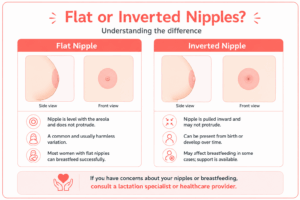
First, understand what has caused your nipple inversion. Some most common causes of such nipple type are:
These two conditions can also cause scarring that retracts the nipple inward.
If you have had breast surgery, a biopsy, breast reduction, or radiation therapy in the past, scar tissue from those procedures can sometimes affect the surrounding ductal tissue and cause the nipple to retract. This type of inversion is usually stable over time.
As we get older, breast tissue naturally loses some of its elasticity. This can lead to mild nipple retraction in older women. It is gradual, affecting both sides, and not linked to any underlying condition. It is a natural part of how breast tissue changes with age.
It is divided into three grades based on the degree of fibrosis.
Grade 1 (Mild)
Grade 1 inverted nipples are sometimes called ‘shy nipples.’ They can be easily pulled outward with light pressure or stimulation and stay out for a little while on their own. The milk ducts are fully intact with little to no fibrous tissue. Breastfeeding is very much possible at this grade.
Grade 2 (Moderate)
At Grade 2, the nipple can still be everted with some manual effort. However, it retracts back quickly. There is some fibrosis present beneath the nipple. Breastfeeding is possible but may need extra support.
Grade 3 (Severe)
Here, the nipple cannot be everted manually at all. There is noticeable fibrosis and shortening of the milk ducts beneath. Surgery is generally the recommended path forward at this stage.
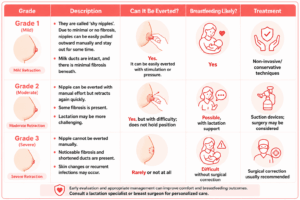
Most people with congenital inverted nipples (those who have since birth) have Grade 1 or Grade 2 inversion. Grade 3 is less common and is more frequently associated with acquired causes such as chronic infection or significant fibrosis.
The treatment for inverted nipples depends majorly on its grade and the root cause. Based on your overall condition, you may be suggested any of these treatment approaches.
Most effective for Grade 1 inversions and mild Grade 2 cases.
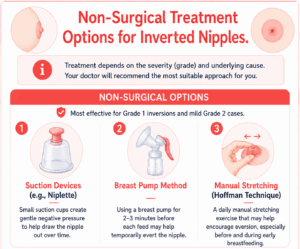
There are two approaches your breast surgeon may discuss with you:
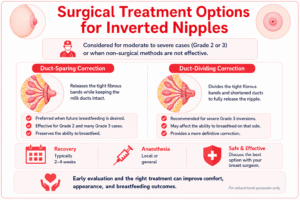
Important: If you are considering nipple correction surgery and have any future plans to breastfeed, discuss this before the procedure, not after. Your surgeon needs to know, as it affects which technique is used. Once duct-dividing surgery has been performed, breastfeeding on that side is generally no longer possible.
You should see a doctor promptly if you notice:
If you have had lifelong inverted nipples, no new symptoms, and no other breast changes, a routine mention to your doctor is sufficient. The breast care specialist will advise on regular breast screening as appropriate for your age and risk profile.
If you have noticed a recent change in your nipple and are struggling to figure out the reason behind it, the expert team of experienced breast specialists, gynecologists, and reconstructive surgeons at the CK Birla Hospital is here to help you. Our dedicated ‘Breast Centre’ provides compassionate care in a safe and private setting. You can book a consultation for early detection.

Extreme heat is one of the leading causes of weather-related illness, causing dehydration, fatigue, heat exhaustion, and in severe cases, heat stroke. Before you rush to stock up on cold drinks and packaged juices, look at one of the easy solutions that may already be sitting in your fruit bowl. The benefits of drinking lemon water in summer go far beyond just quenching your thirst. Let’s understand exactly how this little citrus fruit can make the summer bearable.
Table of Contents
Lemons are a rich source of Vitamin C, citric acid, antioxidants, and plant compounds called flavonoids. According to USDA, one whole lemon squeezed into water provides approximately 30.7 mg of vitamin C and about 17 calories. This delivers roughly 34% of the Daily Value (DV) for vitamin C, making lemon water a simple way to boost your vitamin C intake while adding very few calories.
In summer, your body is under constant stress from heat, fluid loss due to sweat, and environmental exposure. This is precisely when the lemon and water benefits become most relevant. The combination helps replenish fluids, improve your immune system, aids digestion, and even lifts your mood, all without adding sugar or artificial additives.
Starting your summer mornings with lemon water is, in many ways, a small act of selfcare.
Dehydration is the biggest summer health risk. Adults should drink at least 2 to 3 litres of water daily under normal conditions, and significantly more in hot climates. To make water more appealing, lemon adds a natural, pleasant flavour that encourages you to sip more throughout the day.
Vitamin C is a well known supporter of our immune system. It stimulates the production and function of white blood cells that are your body’’ first line of defence against infection. During summer months, when foodborne illnesses and viral infections are more likely to spike, this immune boost is very important.
The citric acid in lemon juice mimics the digestive acids in your stomach. This can help stimulate digestive enzyme production and ease bloating, indigestion, and sluggish digestion, all of which worsen in the heat.
Lemon water helps with liver function by encouraging the production of bile, a digestive fluid that helps the body process fats and flush out waste.
Lemon’s antibacterial properties can help reduce the bacteria responsible for bad breath which is common in summer due to dehydration.
Vitamin C is essential for collagen production, the protein that keeps your skin firm and elastic. When it is combined with improved hydration, the advantages of lemon water include healthier, more resilient skin.
Lemon water is very low in calories and can substitute for sugary drinks like sodas and packaged juices. Remember, lemon water alone is not a weightloss solution. It supports healthier choices as part of a balanced diet.
Timing and preparation both are the important factors when it comes to getting the most from this simple habit.
Beating the summer heat does not always require expensive supplements or complicated routines. Sometimes, the most effective wellness tools are the simplest ones. A glass of lemon water can improve your hydration, immunity, digestion, skin, and energy levels day after day.
If you are still not sure whether this citrus food is right for you or not, you can consult experienced dieticians and nutritionists at the CK Birla Hospital. They can help you build a summer health plan that is personalised, safe, and effective for your unique needs.
The primary benefits of drinking lemon water in summer are improved hydration, a boost in Vitamin C and antioxidant intake, better digestion, natural detox support, and healthier skin. It also serves as a low calorie, refreshing alternative to sugary drinks, helping you manage weight and stay energised through the heat.
If you want to take your morning drink a step further, adding a teaspoon of raw honey to your warm lemon water can amplify the benefits. The benefits of warm water with lemon and honey make this combination a popular Ayurvedic and naturopathic ritual.

It is difficult to imagine losing a part of your body. For many women diagnosed with breast cancer, the thought of breast removal can bring fear, uncertainty, and countless questions about life after surgery.However, breast removal is no longer the default treatment for every breast cancer diagnosis. Due to advances in medical science, multiple treatment options are available today, depending on the type of cancer and a person’s overall health.
Table of Contents
All breast cancer cases are not the same, which is why the treatment plans and surgical options also differ. Your oncology team looks at the whole picture before recommending anything. The breast oncologists will evaluate:
Size and location of the tumour in the breast
Breast cancer is now the most commonly diagnosed cancer worldwide, accounting for roughly 1 in 8 can cer diagnoses globally according to the WHO. With increasing early detection through screening programmes, a growing proportion of patients are being diagnosed at earlier stages, which is exactly where breast conserving surgery becomes most viable.
A lumpectomy removes the tumour plus a small margin of healthy tissue around it, leaving the rest of the breast intact. It is generally followed by a course of radiation therapy to reduce the risk of cancer returning in the remaining tissue. Lumpectomy followed by radiation therapy has been shown to be as effective as mastectomy (full breast removal) for many early stage breast cancers.
Breast conserving surgery tends to be suitable when:
Beyond lumpectomy, there is also a more advanced approach called oncoplastic surgery. It combines tumour removal with reconstructive plastic surgery techniques, performed either at the same time as tumour removal or shortly after.
It allows surgeons to remove more tissues if needed, while reshaping the breast in a way that preserves its natural look. This means patients can have comprehensive cancer treatment without the cosmetic and emotional impact that used to be unavoidable.
Even with all this progress in surgical medicine, some outdated ideas and beliefs continue to circulate. Let’s debunk a few directly.
Myth 1 – “Mastectomy is always safer than lumpectomy. ”It is not always true for most early stage cases. Research consistently shows that lumpectomy along with the radiation therapy offers equivalent survival results for Stage I and Stage II breast cancer. The National Cancer Institute (NCI) confirms this.
Myth 2 – “If I keep my breast, the cancer is more likely to come back.” The risk of local recurrence after lumpectomy is real but it is low, generally around 1 to 2% per year. Your specialist will go through your individual risk profile with you.
Myth 3 – “I can choose mastectomy even if I don’t need it, just to feel safer.” For early stage cancers, removing the entire breast does not automatically improve the survival compared to lumpectomy. A decision to undergo mastectomy should be made thoughtfully, with full information and in consultation with your oncologist and medical team
Myth 4: “Surgery is the only treatment involved.”Surgery is usually one part of a broader treatment plan. Your treatment may also involve chemotherapy, radiation, hormone therapy, or targeted therapy.There are some medical situations where a mastectomy, which means removal of the entire breast, is the most recommended option. These conditions can be:
There are some medical situations where a mastectomy, which means removal of the entire breast, is the most recommended option. These conditions can be:
After a lumpectomy, most patients return home the same day or within 24 hours. Soreness and mild swelling are common for a few weeks, and most women resume light activities within one to two weeks. Radiation therapy usually begins a few weeks after surgery.
After a mastectomy, the hospital stay is usually one to three days. Recovery may take longer, generally four to six weeks for the incision to heal and if reconstruction has been done, the overall recovery timeline may extend further.
Physiotherapy and guided arm exercises are recommended to restore range of motion.
Emotional recovery is equally important and equally valid.
The psychological impact of breast cancer surgery including changes in body image and self-esteem is very important for many women.
Modern surgical options have made it possible for many women to treat cancer effectively while preserving what matters to them, physically, emotionally, and personally.
If you or a loved one is navigating this journey, the most important thing is getting good information and the right medical care that you can trust. Our dedicated ‘Breast Centre’ at the CK Birla Hospital brings together experienced oncological surgeons, oncoplastic specialists, and a full multidisciplinary team. You are welcome to call or book a consultation whenever you need advice.
No. Many patients, particularly those diagnosed at early stages, can go for breast conserving surgery (lumpectomy) combined with radiation therapy. Whether a mastectomy is needed depends on tumour size, location, cancer type, genetic risk, and individual circumstances.
A lumpectomy removes only the tumour and a small surrounding margin of healthy tissue, preserving the rest of the breast.
A mastectomy involves removing the entire breast. Both may be followed by additional treatments such as radiation, chemotherapy, or hormone therapy.
For early stage breast cancers, lumpectomy with radiation therapy offers equivalent long-term survival rates compared to mastectomy. Your oncologist will advise on the best option for your specific diagnosis.
Yes. Immediate breast reconstruction is performed during the same operation as mastectomy and it is a well-established and widely available option. It uses either implants or the patient’s own tissue (flap procedures). Your surgical team will discuss whether immediate or delayed reconstruction is more appropriate for your situation.

An assumption that stroke only happens to people in their 60s or 70s is one of the most dangerous misconceptions in modern health today. The reality is concerning! Strokes are happening to younger adults at an increasing rate, and the warning signs are being missed because no one expects them. A stroke happens when blood supply to a part of the brain is suddenly interrupted, either because a blood vessel gets blocked or because a blood vessel ruptures and bleeds into the brain. When brain cells do not get enough oxygen-rich blood, they begin to die within minutes, which makes this condition more time crucial and life threatening.
In older adults, the causes like weak arteries due to aging are fairly well understood. But in young people, the condition is more complex.Here are the most common causes of stroke in young adults that doctors are seeing today:
Table of Contents
The challenge with stroke in young adults is that it is almost always unexpected. A healthy seeming person is the last person anyone would suspect of having a stroke. This leads to delays in seeking care.
A simple and reliable tool for recognising a stroke quickly is the FAST acronym.
If you notice any of these signs, call for help immediately. Do not wait to see if it passes.
Apart from the FAST signs, there are other stroke symptoms that younger adults may experience:
These symptoms can sometimes show briefly and resolve within minutes, in what is called a Transient Ischemic Attack or TIA, also known as a ‘mini-stroke.’
Some risk factors are unique to or more common in younger adults, and they go unrecognised until a stroke actually occurs.
Time is the single most critical factor in stroke results. Brain cells begin to die within minutes of losing blood supply, and every minute without treatment can cause lasting damage.
If you or someone around you shows any stroke symptoms, here is what to do:
The majority of strokes are preventable, and when caught early, treatment results for younger adults are more likely to be better than for older patients.
Prevention, however, remains the most powerful strategy.
Medical emergencies like stroke are also affecting younger people who are at the height of their careers and family lives and it is doing so at a time when they have the most to lose. However, most strokes are preventable, and when they do occur, early action can save your life.
At the CK Birla Hospital, our expert team of neurologists and stroke specialists is committed to providing overall care for patients of all ages. If you have any doubt, book a consultation with our neurology team today.
What is the most common cause of stroke in young adults?
The most common causes are high blood pressure, cardiac conditions, blood clotting disorders, arterial dissection, and diabetes.
Can a person in their 20s or 30s have a stroke?
Yes. The overall risk is lower than in older adults, strokes do occur in people as young as their teens and twenties. Undiagnosed hypertension, heart abnormalities, and clotting disorders can all cause stroke even in seemingly healthy young people.
How is stroke in young age different from stroke in older people?
Stroke in younger adults has different underlying causes such as arterial dissection, clotting disorders, or genetic factors, compared to older adults where hardening of arteries is the dominant factor. Symptoms can also be intermittent, making them easier to dismiss.
What are the early warning signs of stroke in young adults that are often ignored?
Signs that frequently get dismissed are sudden numbness or tingling on one side of the body, a brief episode of slurred speech, sudden vision changes, dizziness, and a severe headache. Many young adults attribute these to stress, migraine, or exhaustion.
Can stroke in young age be prevented with lifestyle changes?
The majority of stroke risk factors can be managed with positive lifestyle changes. Regular monitoring of blood pressure and blood sugar, a healthy diet, consistent physical activity, quitting smoking, limiting alcohol, and managing stress can reduce risk. For those with specific medical risk factors, medication and close followup with a doctor provide an additional essential layer of protection.

Have you also been hearing about people as young as their 30s or 40s collapsing due to a heart attack? This is no rare story. Earlier, medical emergencies like heart attacks were largely seen in older people, but in recent years, heart problems are increasingly common in young adults.
When these problems are rising so rapidly, we cannot ignore them. To protect yourself, it is very important to be aware of why such cases are increasing. Knowing the early signs, understanding the causes, and acting in time could really be life-saving for you or someone you love. Read on to find out more.
Table of Contents
Let’s first understand what a heart attack actually is.
A heart attack (medically known as a myocardial infarction) occurs when the flow of oxygen-rich blood to part of the heart muscle is suddenly blocked, usually by a blood clot in a coronary artery. If not treated promptly, the affected heart muscle can be damaged or die due to a lack of blood supply, leading to permanent heart damage.
For decades, cardiovascular disease was thought to be a condition that mainly affected older people. Today, however, more and more younger adults are being affected by it too.
Research presented at the American College of Cardiology found a worrying trend. The proportion of heart attacks occurring in adults aged 40 and younger increased by about 2% each year over the last decade of a 16-year study.
In India, the situation is equally sobering. Data from the Indian Heart Association shows that half of all heart attacks in Indian men occur before the age of 50, and a quarter before the age of 40.
To understand the cause of heart attack at a young age requires looking at both inherited and lifestyle factors.
They are the most powerful contributors. These conditions slowly damage the walls of arteries over years.
Excess body weight puts sustained strain on the heart. This raises blood pressure, and worsens cholesterol profiles, all of which increase heart attack risk.
Tobacco damages blood vessels and accelerates the buildup of plaque, which is the fatty deposits inside arteries.
If a close family member experienced a heart attack before the age of 55, your own risk increases considerably. Inherited conditions such as familial hypercholesterolaemia, which is a genetic disorder that causes dangerously high cholesterol levels from birth, can affect arterial blockages.
Stress affects the release of hormones like cortisol and adrenaline that, over time, raise blood pressure and cause inflammation in the arteries. Studies increasingly show a strong connection between anxiety, depression, and heart disease risk in younger populations.
Hours spent sitting at desks, in front of screens combined with diets high in processed foods, trans fats, and sodium create the environment for early cardiovascular disease.
One of the reasons heart attacks in young people are so dangerous is that the warning signs can be easy to dismiss or misattribute to something else like stress, acid reflux, muscle strain, or fatigue.
Here are the common symptoms you should never ignore:
It is important to note that women and younger adults may sometimes experience atypical heart attack symptoms. The crushing chest pain may be absent. Instead, symptoms such as nausea, jaw pain, shortness of breath, or overwhelming fatigue may be the primary signs. Do not wait to see if the symptoms pass. Seek emergency medical care immediately.
Modern life has made it easier to live in ways that gradually damage your heart. Long work hours, stressful environments, poor sleep, convenience food, and digital sedentariness are the new normal.
Sleep deprivation is an overlooked risk factor. Consistently sleeping fewer than 6 hours a night has been linked to higher rates of hypertension, inflammation, and heart disease.
Consuming too much alcohol raises blood pressure and can affect abnormal heart rhythms called arrhythmias.
Mental load may not be a traditional risk factor but it contributes to chronic stress that keeps the body’s fight or flight system activated far longer than it was designed to be.
The concerning part is that these habits generally start in the 20s and 30s.
The choices made in your 20s, 30s, and 40s decide your health. The rising cases of heart attack in young adults is a wake up call. If you have been experiencing any unusual symptoms, have a family history of heart disease, or simply want to understand your cardiac risk better, do not delay and consult with the healthcare specialist.
The CK Birla Hospital has a team of experienced cardiologists and cardiac specialists who provide comprehensive heart care. You can book a consultation with our Cardiology team to assess your risk, discuss your symptoms, and take charge of your heart health before it becomes an emergency
The most common reasons for a heart attack at a young age are high blood pressure, high cholesterol, type 2 diabetes, obesity, smoking, a sedentary lifestyle, stress and family history of heart disease.
Early warning signs are chest pain or pressure, shortness of breath, pain spreading to the jaw, neck, left arm, or back, nausea, cold sweats, dizziness, and unusual fatigue. Any of these symptoms warrant immediate medical attention.
Serious coronary heart attacks are very rare in teenagers. However, teenagers can experience sudden cardiac arrest which is an abrupt stopping of the heart. It is often due to undiagnosed conditions such as hypertrophic cardiomyopathy, congenital heart defects, or electrical rhythm disorders. Lifestyle factors such as drug use, obesity, and physical inactivity can also increase risk over time.
In younger adults, heart attacks are usually caused by sudden plaque rupture rather than the slow, progressive narrowing of arteries more common in older people. Younger patients may recover better if treated timely.
Yes. The majority of heart attack risk factors in young adults including high blood pressure, obesity, inactivity, smoking, poor diet, and unmanaged stress are manageable. Regular health checkups, physical activity, a balanced diet, and avoiding tobacco can reduce risk. Starting these habits in your 20s and 30s provides the greatest long-term cardiovascular benefit.

“Why do I have a headache every day?”
It is one of the most common health questions people search online. If you experience headaches every day or find yourself searching for reasons for frequent headaches more and more often, this article is for you.
We will walk you through the most common causes of constant headaches, help you recognise warning signs that need medical attention, and explain when it is time to see a specialist.
Table of Contents
For millions of people, headaches are something they have to deal with daily, something they try to push through with a glass of water and a painkiller.
Most recurring headaches are not dangerous. They are, however, a sign from your body asking for medical attention.
Here are the most common causes of constant headaches:
You first need to identify your personal triggers if you want to manage the recurring headaches.
Doctors classify them broadly as primary headaches (which are the condition themselves) and secondary headaches (which are symptoms of something else).

Here is what each common type looks like:
The vast majority of daily headaches are linked to common lifestyle factors. However, a small but important number may be red-flag headaches that require urgent medical attention.
You should seek medical help timely if:
You must be wondering at what point does a recurring headache stop being “just a headache”. Do not delay seeing a doctor if you experience any of these signs:
Most recurring headaches respond very well to the right treatment and lifestyle changes.
The right treatment depends on the type and pattern of your headaches which is exactly why a specialist assessment is important.
Frequent headaches are one of the most common health complaints, but that does not mean they should simply be taken lightly. In most cases, the reasons for headaches every day are treatable lifestyle factors. But some headaches do point to something more serious. If you are experiencing any of the red flag symptoms described in this article, do not delay consulting a healthcare specialist.
Our team of experienced neurologists at the CK Birla Hospital provides comprehensive care for all types of headache disorders. You can simply reach out to us or book a consultation to get the expert advice.
Chronic stress and muscle tension, poor sleep, dehydration, skipping meals, excessive screen time, caffeine dependence, and medication overuse are some most common reasons for frequent headaches every day. Hormonal fluctuations, particularly in women, can also be a reason.
A continuous headache for days should prompt you to see a doctor, especially if it is unusual for you, is not responding to your usual pain relief, or is accompanied by any red flag symptoms such as fever, neck stiffness, vision changes, confusion, or weakness.
In most cases, mild headaches every day are caused by tension, lifestyle factors, or medication overuse rather than anything life-threatening. However, if the pattern changes, the headaches worsen, or they come with neurological symptoms, you need a professional evaluation.
A regular recurring headache such as a tension-type headache or migraine, is itself a primary neurological condition, but it does not signal structural damage to the brain.
A secondary or neurological headache is one that is a symptom of an underlying condition such as increased intracranial pressure, a brain tumour, an aneurysm, meningitis, or a stroke.

Have you also been hearing about people as young as their 30s or 40s collapsing due to a heart attack? This is no rare story. Earlier, medical emergencies like heart attacks were largely seen in older people, but in recent years, heart problems are increasingly common in young adults.
When these problems are rising so rapidly, we cannot ignore them. To protect yourself, it is very important to be aware of why such cases are increasing. Knowing the early signs, understanding the causes, and acting in time could really be life-saving for you or someone you love. Read on to find out more.
Table of Contents
Let’s first understand what a heart attack actually is.
A heart attack (medically known as a myocardial infarction) occurs when the flow of oxygen-rich blood to part of the heart muscle is suddenly blocked, usually by a blood clot in a coronary artery. If not treated promptly, the affected heart muscle can be damaged or die due to a lack of blood supply, leading to permanent heart damage.
For decades, cardiovascular disease was thought to be a condition that mainly affected older people. Today, however, more and more younger adults are being affected by it too.
Research presented at the American College of Cardiology found a worrying trend. The proportion of heart attacks occurring in adults aged 40 and younger increased by about 2% each year over the last decade of a 16-year study.
In India, the situation is equally sobering. Data from the Indian Heart Association shows that half of all heart attacks in Indian men occur before the age of 50, and a quarter before the age of 40.
To understand the cause of heart attack at young age requires looking at both inherited and lifestyle factors.
Metabolic Conditions
They are the most powerful contributors. These conditions slowly damage the walls of arteries over years.
Here are the common symptoms you should never ignore:
It is important to note that women and younger adults may sometimes experience atypical heart attack symptoms. The crushing chest pain may be absent. Instead, symptoms such as nausea, jaw pain, shortness of breath, or overwhelming fatigue may be the primary signs. Do not wait to see if the symptoms pass. Seek emergency medical care immediately.
Modern life has made it easier to live in ways that gradually damage your heart. Long work hours, stressful environments, poor sleep, convenience food, and digital sedentariness are the new normal.
Sleep deprivation is an overlooked risk factor. Consistently sleeping fewer than 6 hours a night has been linked to higher rates of hypertension, inflammation, and heart disease.
Consuming too much alcohol raises blood pressure and can affect abnormal heart rhythms called arrhythmias.
Mental load may not be a traditional risk factor but it contributes to chronic stress that keeps the body’s fight or flight system activated far longer than it was designed to be.
The concerning part is that these habits generally start in the 20s and 30s.
Prevention can actually help from this life threatening condition, and the earlier you start, the better the result.
The CK Birla Hospital has a team of experienced cardiologists and cardiac specialists who provide comprehensive heart care. You can book a consultation with our Cardiology team to assess your risk, discuss your symptoms, and take charge of your heart health before it becomes an emergency.
What is the most common reason for a heart attack at a young age?
The most common reasons for a heart attack at a young age are high blood pressure, high cholesterol, type 2 diabetes, obesity, smoking, a sedentary lifestyle, stress and family history of heart disease.
What are the early warning symptoms of heart attack in young adults?
Early warning signs are chest pain or pressure, shortness of breath, pain spreading to the jaw, neck, left arm, or back, nausea, cold sweats, dizziness, and unusual fatigue. Any of these symptoms warrant immediate medical attention.
Can teenagers have heart attacks, and what causes them?
Serious coronary heart attacks are very rare in teenagers. However, teenagers can experience sudden cardiac arrest which is an abrupt stopping of the heart. It is often due to undiagnosed conditions such as hypertrophic cardiomyopathy, congenital heart defects, or electrical rhythm disorders. Lifestyle factors such as drug use, obesity, and physical inactivity can also increase risk over time.
How is a heart attack in young adults different from one in older people?
In younger adults, heart attacks are usually caused by sudden plaque rupture rather than the slow, progressive narrowing of arteries more common in older people. Younger patients may recover better if treated timely.
Can heart attacks at a young age be prevented through lifestyle changes?
Yes. The majority of heart attack risk factors in young adults including high blood pressure, obesity, inactivity, smoking, poor diet, and unmanaged stress are manageable. Regular health checkups, physical activity, a balanced diet, and avoiding tobacco can reduce risk. Starting these habits in your 20s and 30s provides the greatest long-term cardiovascular benefit.

Have you ever found yourself scratching your arms, legs, or back repeatedly and wondering, “Why is my body itchy all the time?” Occasional itching is common, but itchy skin that refuses to go away may be a sign that it is time to seek medical attention.
For many people, an itching problem can be due to dry skin, seasonal changes, or an allergic reaction. However, in some cases, when your whole body feels itchy may be connected to underlying health conditions. In this blog, let’s walk through the causes of body itching that can help you recognize when simple selfcare may be enough and when it is time to go to a doctor.
Table of Contents
The medical term for itchy skin is pruritus. It refers to an uncomfortable sensation that makes you want to scratch.
It can affect a small area or involve the entire body. It may irritate you with redness, bumps, or a rash, but sometimes the skin looks completely normal.
Your skin contains specialized nerve endings that react to irritation, dryness, inflammation, or certain chemicals released by the body. When these nerves are triggered, they send signals to the brain, creating the urge to scratch.
Although scratching may provide temporary relief, excessive scratching can damage the skin, worsen inflammation that can frustrate you.
Most itchy skin causes are not serious. Some of the most common reasons are:

It is one of the major reasons for this condition, especially during winter or in air conditioned environments. Aging can also reduce the skin’s natural moisture levels. Its common signs are:
An itchy skin allergy occurs when the immune system reacts to a substance that it considers harmful. Some possible factors that can cause skin allergies are:
Eczema and dermatitis are inflammatory skin conditions that frequently cause itching, redness, and irritation. These conditions can flare up due to stress, allergens, weather changes, or skin sensitivity.
Certain fungal infections, bacterial infections, and parasitic conditions can also lead to itchy skin. These produce visible changes such as redness, scaling, or small bumps.
Excessive sweating can block sweat glands and irritate the skin, leading to itching, especially in hot and humid climates.
One of the most confusing situations is experiencing a whole body itching with no rash. Many people assume that itching must always be caused by a skin problem, but this is not always true. Sometimes, the skin looks completely normal, but the itching originates from internal changes within the body.
The following points highlights some possible causes:
This is why persistent whole body itching should not always be dismissed as a simple skin issue.
Most cases of itchy skin improve with moisturisers and basic skincare. However, certain symptoms need your serious attention.
You should consider seeing a skin specialist if:
These signs do not necessarily mean something serious is happening with your body, but they do indicate that a proper evaluation is worthwhile. A dermatologist can help identify the reason for itching in whole body areas through a detailed examination, medical history review, and, if necessary, blood tests or allergy testing.
When you know the reasons behind your itchy skin, you can prevent it from getting more serious. If you are experiencing full body itching, or recurring itchy skin allergy symptoms, speaking with a skin specialist can help you choose the right course of action.
At the CK Birla Hospital, experienced dermatologists can help you identify the root cause of persistent itching and guide you toward effective treatment, so you can feel comfortable in your skin again.
Common reasons for itchy skin include dry skin, allergies, eczema, reactions to skincare products, infections, and environmental factors such as heat or low humidity. In some cases, internal health conditions may also contribute.
A reason for whole body itching with no rash can be liver disease, kidney disease, thyroid disorders, diabetes, medication side effects, or nerve-related conditions. Sometimes the skin looks normal even when an internal condition is present.
Body temperature changes, lower nighttime distractions, and natural shifts in inflammatory chemicals can make itching feel more intense during the evening and night.
You should seek medical advice if itching persists for several weeks, disrupts sleep, affects daily life, or occurs alongside symptoms such as fatigue, jaundice, unexplained weight loss, or other concerning changes.

Every 4 minutes, an Indian woman is diagnosed with breast cancer. Every 8 minutes, one loses her life to it. According to the Indian Council of Medical Research (ICMR), breast cancer is now the most common cancer among Indian women, accounting for nearly one in four cancer cases in women in the country. Globally, the World Health Organization (WHO) reports that approximately 2.3 million women are diagnosed with breast cancer each year, making it the most prevalent cancer worldwide.
However, these statistics must not overshadow that when detected early, breast cancer may increase the survival rate. Therefore, it is very important to be aware of it.
Table of Contents
Breast cancer is a condition where breast cells grow uncontrollably and abnormally, forming a lump or mass (called a tumour). Normally, our body’s cells grow, divide, and die in an organised process. When something causes disruption in this process, cells can multiply faster than they should and that overgrowth is what we call cancer.
Breast cancer most commonly begins in the milk ducts (the tubes that carry milk to the nipple) or in the lobules (the glands that produce milk). However, not all breast lumps are cancerous. Many are benign meaning non-harmful. But any new lump or change in the breast should never be ignored.
Also Read: Anteverted Uterus: Positions & Is it Good or Bad
Most people think a lump is the only warning sign of breast cancer. But your body sends other signals too and knowing them could help you a lot in detecting any problem.
Here are some common signs you should never ignore:
Also remember that symptoms of breast cancer in women are not the same for everyone. Some women notice multiple changes at once, while others may have no symptoms at all in the early stages. That is exactly why regular breast cancer screening is very important, even when you feel completely fine.
Also Read: Anterior Placenta: What is it? Diagnosis & Complications
There are different types of breast cancer types that can help explain why treatment approaches vary so much between patients.
Also Read: What is Mastitis? It’s Causes, Symptoms, Diagnosis, Prevention and Treatment
The breast cancer stages describe how far the disease has spread in the body, and they directly influence the treatment plan. Stages run from 0 to IV:
When diagnosed early, survival can vastly improve. That’s why awareness and regular screening are very important.
Also Read: What is cholesterol? Type, normal range, Diagnosis and Treatment
This is a question that can make many people feel scared. Breast cancer can be life threatening, especially when it is diagnosed at an advanced stage. However, survival rates have improved over the past few decades. According to the National Cancer Institute (NCI), the overall 5 year relative survival rate for breast cancer in the U.S. is approximately 91%. It is possibly due to better screening, earlier detection, and more effective treatments.
The message here is that a breast cancer diagnosis does not mean losing your life. When detected early, many people go on to live healthy lives after treatment.
Also Read: What is Endometrial Thickness and Why Does it Matter?
It can be caused by varied factors such as:
While you cannot eliminate all risk, you can reduce its chances by performing proactive habits:
Also Read: Can Long-Term Junk Food Habits Raise Your Breast Cancer Risk?
The treatment of breast cancer depends on its severity and stage. An oncologist may suggest:
It is true that we cannot always control whether a disease develops, but what we can do is stay aware and informed. Paying attention to your body, noticing small changes, and going for regular screening, these simple steps can really help in the long run.
At the CK Birla Hospital, we focus on building that awareness and supporting women through every stage of their breast health journey. We also have a dedicated ‘breast centre’ that aims to ensure every patient receives the attention, care, and support they need. If you ever feel unsure or simply want to get things checked, you can book a consultation and speak with experienced oncologists, gynaecologists, and other specialist doctors.
Also Read: Myths About Breast Cancer
Why does breast cancer happen in females?
Women naturally have more breast tissue, and their bodies are strongly influenced by hormones like estrogen and progesterone. These hormones fluctuate throughout life, during periods, pregnancy, and menopause and over time, that hormonal activity can trigger abnormal cell growth in the breast.
Does breast cancer cause hair loss?
Not directly. Hair loss is actually a side effect of chemotherapy, not the cancer itself. For most people, hair grows back once treatment is complete.
Does breast cancer hurt?
Breast cancer is usually painless in its early stage, which is exactly why you should never wait for pain before getting checked. Discomfort may develop as the disease progresses, but pain-free does not mean problem-free.
Is breast cancer genetic?
Around 5 to 10% of cases are linked to inherited gene mutations like BRCA1 and BRCA2. If someone has breast cancer in your family, speak to your doctor about genetic counseling.
Will breast cancer come back?
Recurrence is possible, which is why regular follow ups after treatment matter so much. The risk depends on the original stage and type, but many people go on to live full, cancer-free lives for decades after treatment.
Can men get breast cancer?
It is very rare. Men have breast tissue and can develop breast cancer. Any unexplained lump or breast change in men should be evaluated by a doctor.

